
Building a Beachfront Villa in Thailand
What property owners should know, from choosing the plot to looking after the villa once it’s built.
A beachfront villa in southern Thailand is a rare opportunity, but it is not built the way an inland house is. Salt air, humidity, wind and the monsoon season all shape the design from the first drawing.
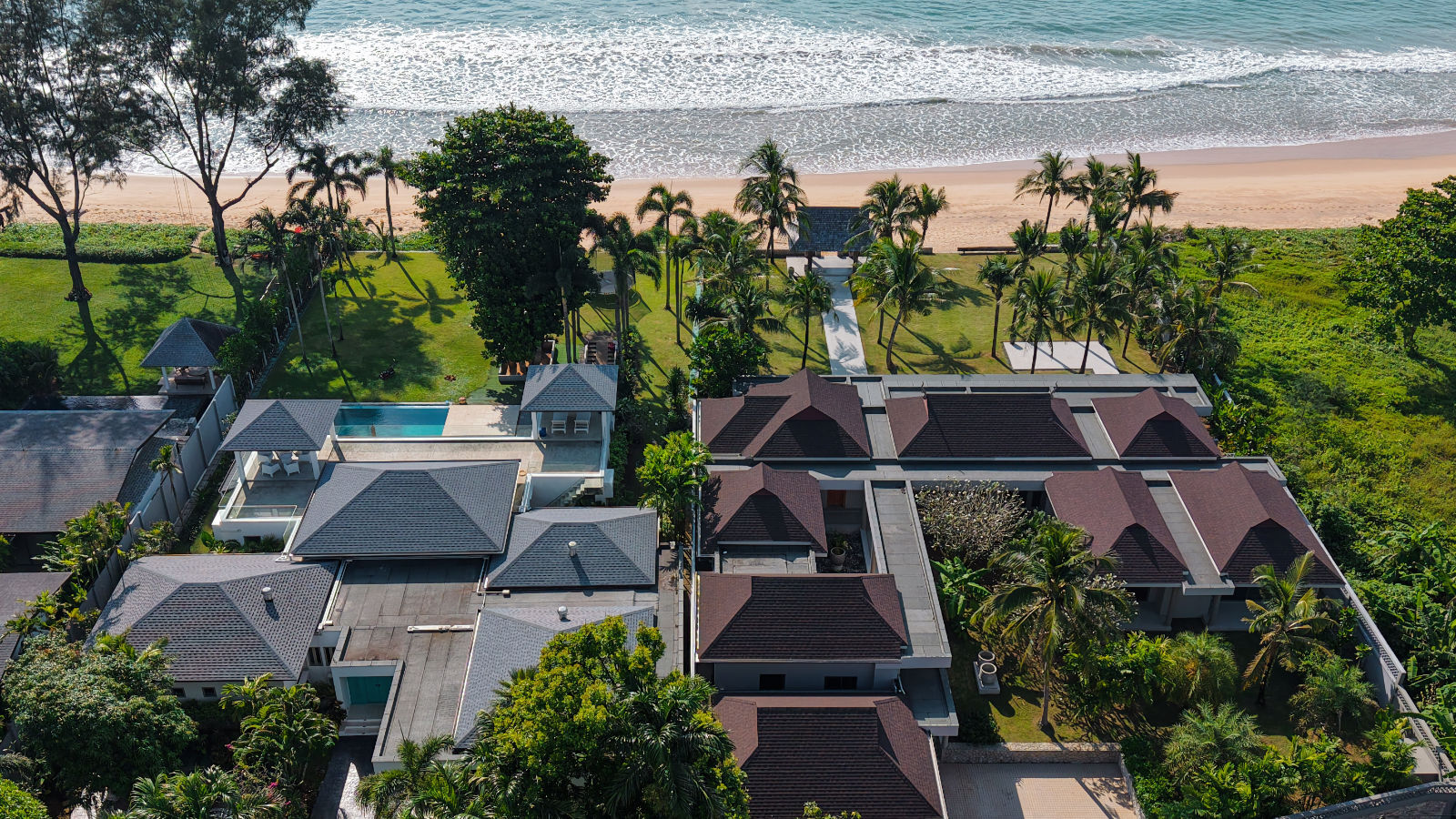
On Natai Beach, just north of Phuket in Phang Nga, private villas have grown up over the past two decades in a low-density setting. The coastline is still open, which makes it one of the few places near Phuket where a beachfront villa can be designed with real space, privacy and direct access to the sea.
We have been building, renovating and managing villas on Natai Beach since 2005. This guide covers what we look at before, during and after a beachfront build.
What the coast
does to a building
A villa on the sand is exposed to salt, moisture and wind every day of the year. Materials that last for decades inland can corrode, stain or fail within a few seasons by the sea, so a beachfront villa has to be designed for durability from the start.
Corrosion
Salt in the air attacks the wrong fixings, metals and finishes. Specify marine-grade metals and weather-resistant finishes from the outset.
Moisture
Humidity affects both the structure and the systems inside it, from electrics to air conditioning. Plan for ventilation and access for upkeep.
Structural load
Wind and the monsoon season add loads an inland house never sees. Deal with them in the design, not after the first storm.
Choosing the
right plot
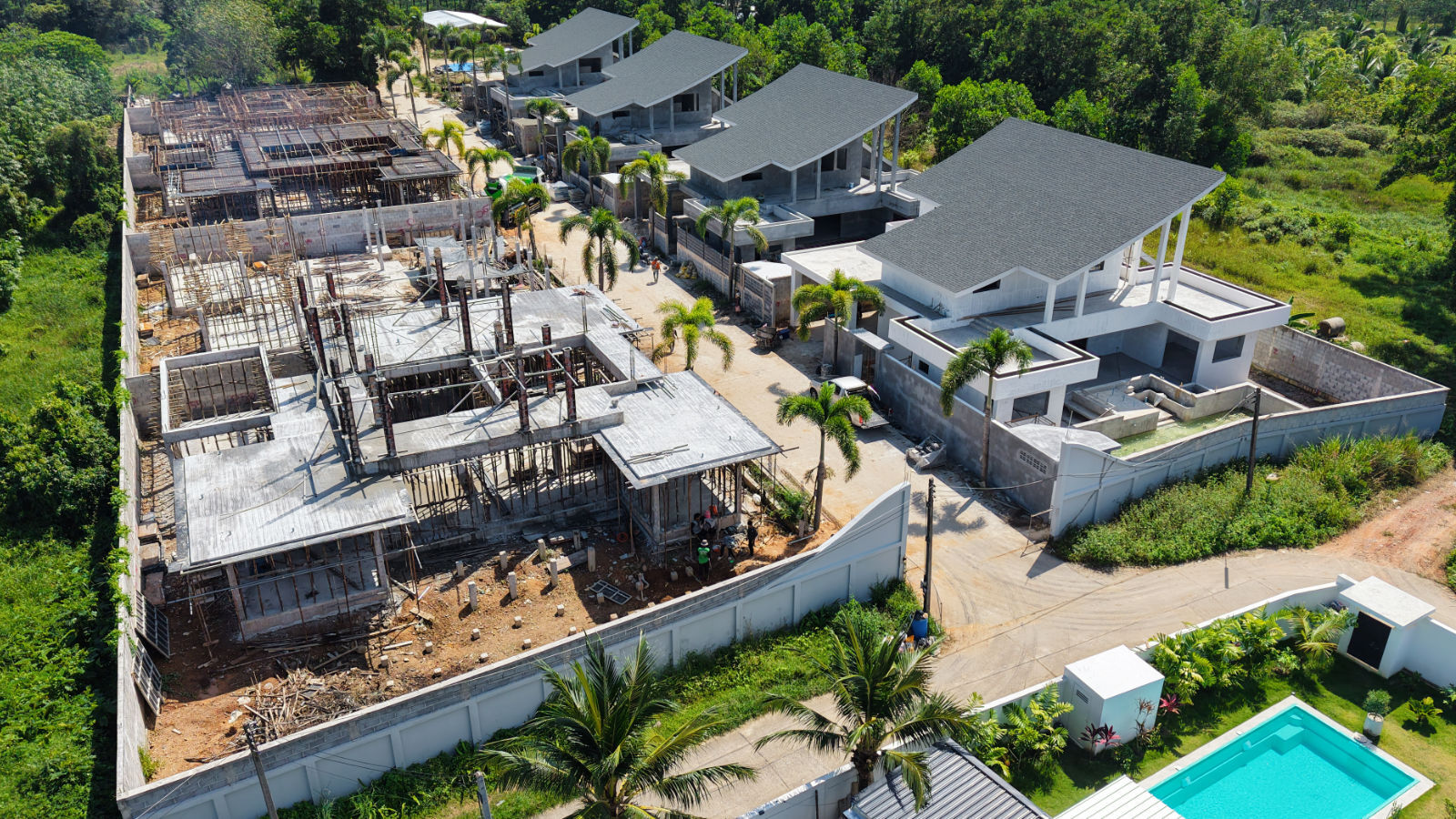
The plot decides most of what follows. Natai Beach offers larger plots than many parts of Phuket, which leaves room for better layouts, more privacy and proper outdoor space.
- ElevationHow high the plot sits above the beach and the road.
- DrainageWhere the water goes in a heavy monsoon downpour.
- Soil conditionsWhat the foundations need to carry the building safely.
Each of these changes how the villa is designed, so it is far cheaper to know them before the plans are drawn than after.
Materials and design
for tropical living
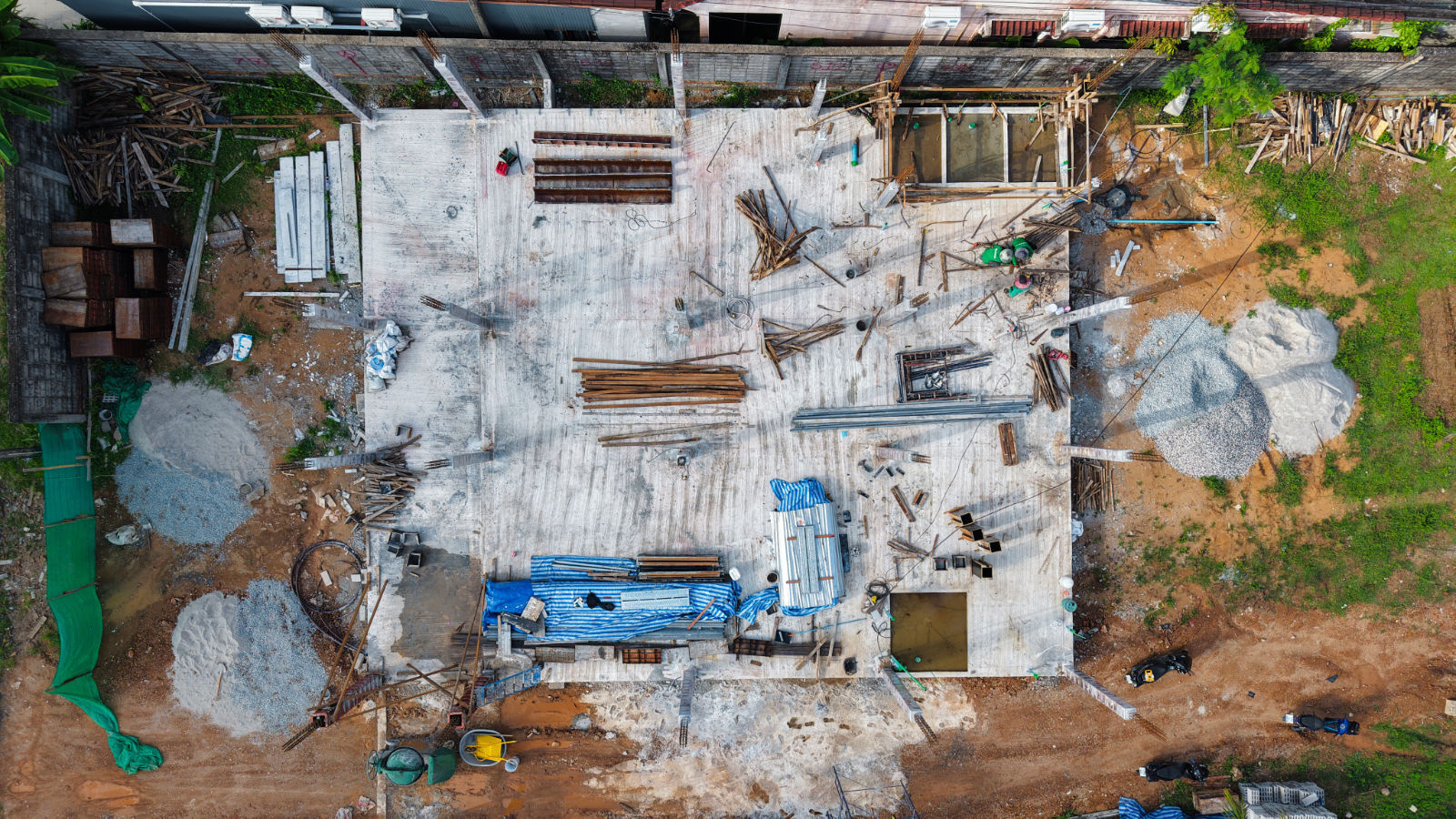
Material choice has the biggest effect on how long a beachfront villa lasts. Reinforced concrete, marine-grade metals and weather-resistant finishes are the usual starting point for coastal conditions.
Comfort matters just as much. Open layouts, natural airflow and shaded outdoor areas keep a villa cooler. One of our recent private residences uses a Venturi wind system that moves air through carefully placed openings, reducing the need for air conditioning.
The best villas balance indoor and outdoor space, so the house feels connected to the garden and the sea.
A beachfront villa is designed for the coast from the first drawing, not adapted to it after the first storm.
Ownership and permits
Land ownership in Thailand works differently for foreign buyers, and building permits are issued locally. Take independent legal advice on the structure of the purchase before you commit to a plot, and make sure permits are in place before work starts.
Looking after it
once it’s built
A beachfront villa needs ongoing care. Regular inspections, cleaning and preventive maintenance protect it from salt and humidity, and small issues fixed early stop them becoming expensive ones.
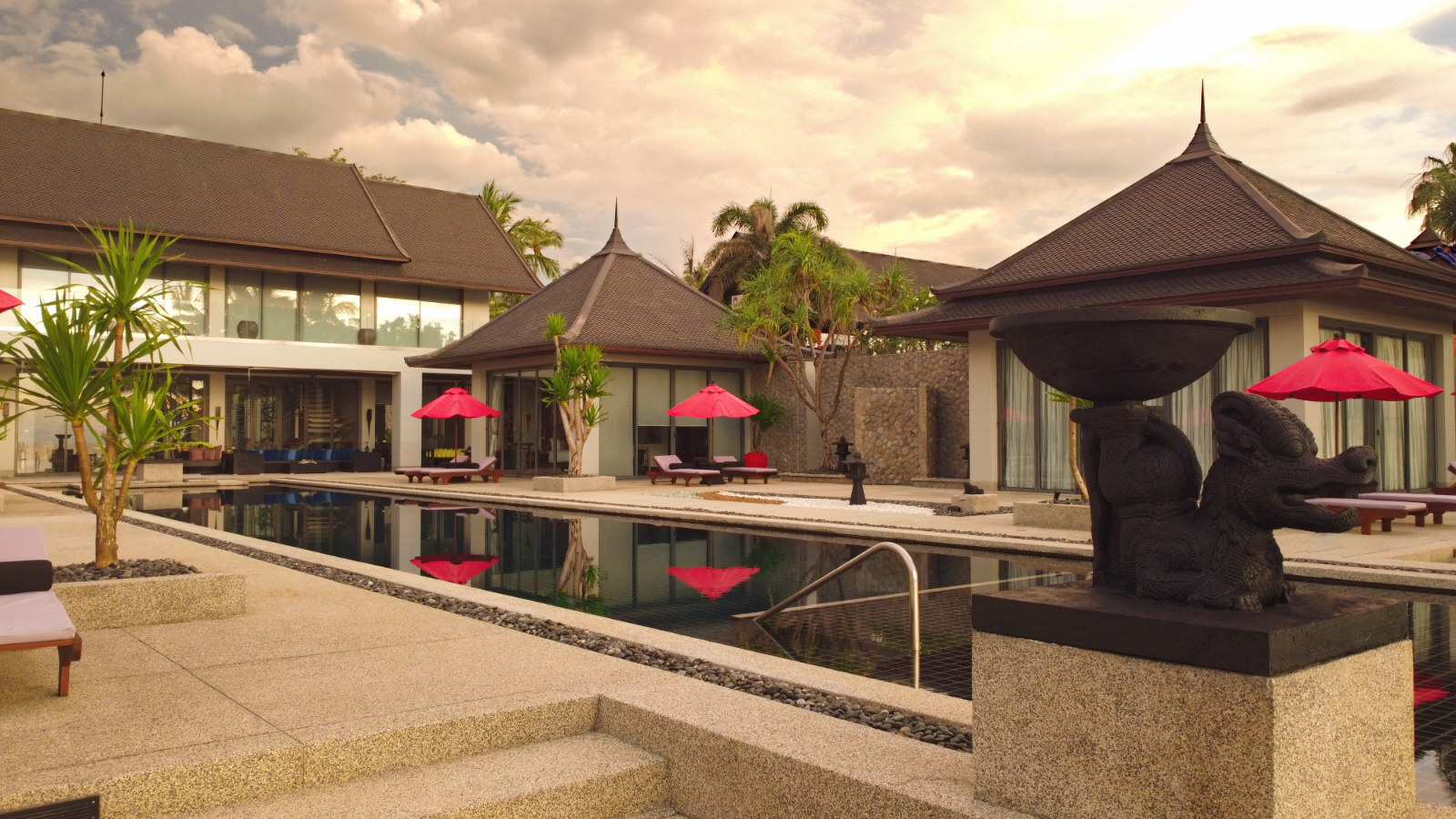
Many owners don’t live at their villa year-round, so they hand the day-to-day care to a local management team. Villa Viva, pictured, was built by our team in 2007–2009 and has been under our management ever since.
Villa Management →Why build
on Natai Beach
Natai Beach is one of the least developed stretches of coast near Phuket. It has become known for high-quality private villas while keeping its natural character, and it sits around 30 minutes from Phuket International Airport across the Sarasin Bridge.
For owners who want seclusion without being cut off, that balance is hard to find this close to Phuket.
About Natai Beach →Before you build: a short checklist
- Plot assessed for elevation, drainage and soil
- Legal advice taken on ownership, permits in place
- Materials and fixings specified for salt air
- Layout designed for airflow and shade
- Allowance made for wind and monsoon loads
- A maintenance plan for after handover
Planning a build
on Natai Beach?
Building on the beachfront means understanding the coast, from the plot to the materials to the years of upkeep after handover. Our portfolio includes 14 construction and renovation projects, 8 of them on Natai Beach.
Construction & Renovation
Design, construction and renovation of private villas on Natai Beach and across Phang Nga and Phuket.
Construction & Renovation →Villa Management
Once it’s built: staff, maintenance, rentals and bills handled by the same local team.
Villa Management →